The New Coaching Reality: Leadership, Meaning and Human Development in Modern Sport

The New Coaching Reality: Leadership, Meaning and Human Development in Modern Sport

For generations, coaching was largely about helping athletes perform. Teach the skills. Improve the tactics. Prepare for competition. Pursue results. Those responsibilities still matter, but the reality of modern coaching has become far more complex. Today's coaches are increasingly navigating questions of identity, belonging, confidence, wellbeing, purpose, social pressures, family dynamics, and human development. This does not mean coaches need to become psychologists. It does mean that coaching can no longer be understood purely through performance. Every coach shapes culture. Every coach influences belonging. Every coach contributes to the environment within which young people learn not only how to perform, but who they are becoming. The best coaches still pursue excellence. They simply recognise that sport is never the only thing being developed. Perhaps the defining challenge of modern coaching is not helping athletes become better players, but helping people become their best selves through sport.

Read More
Development in an Age of Performance: Why Modern Youth Sport Struggles to Play the Long Game

Development in an Age of Performance: Why Modern Youth Sport Struggles to Play the Long Game

Every sporting organisation says development is the priority. Coaches talk about long-term growth. Parents want young people to reach their potential. Talent pathways are built around the language of development. Yet many of the systems surrounding youth sport continue rewarding something very different: early performance. Selection, winning, rankings, visibility, and immediate results often receive more attention than confidence, resilience, belonging, leadership, or long-term growth. The challenge is not that performance matters. It does. The challenge is when performance becomes a substitute for development. History is full of athletes who matured later, developed differently, or emerged unexpectedly. Yet many systems continue behaving as though future success can be identified early. If development is truly a long game, are we creating environments that reward patience, learning, and growth, or are we simply rewarding those who perform first? Perhaps the defining challenge of modern youth sport is not whether development matters, but whether we are willing to value it when the results are not yet visible.

Read More

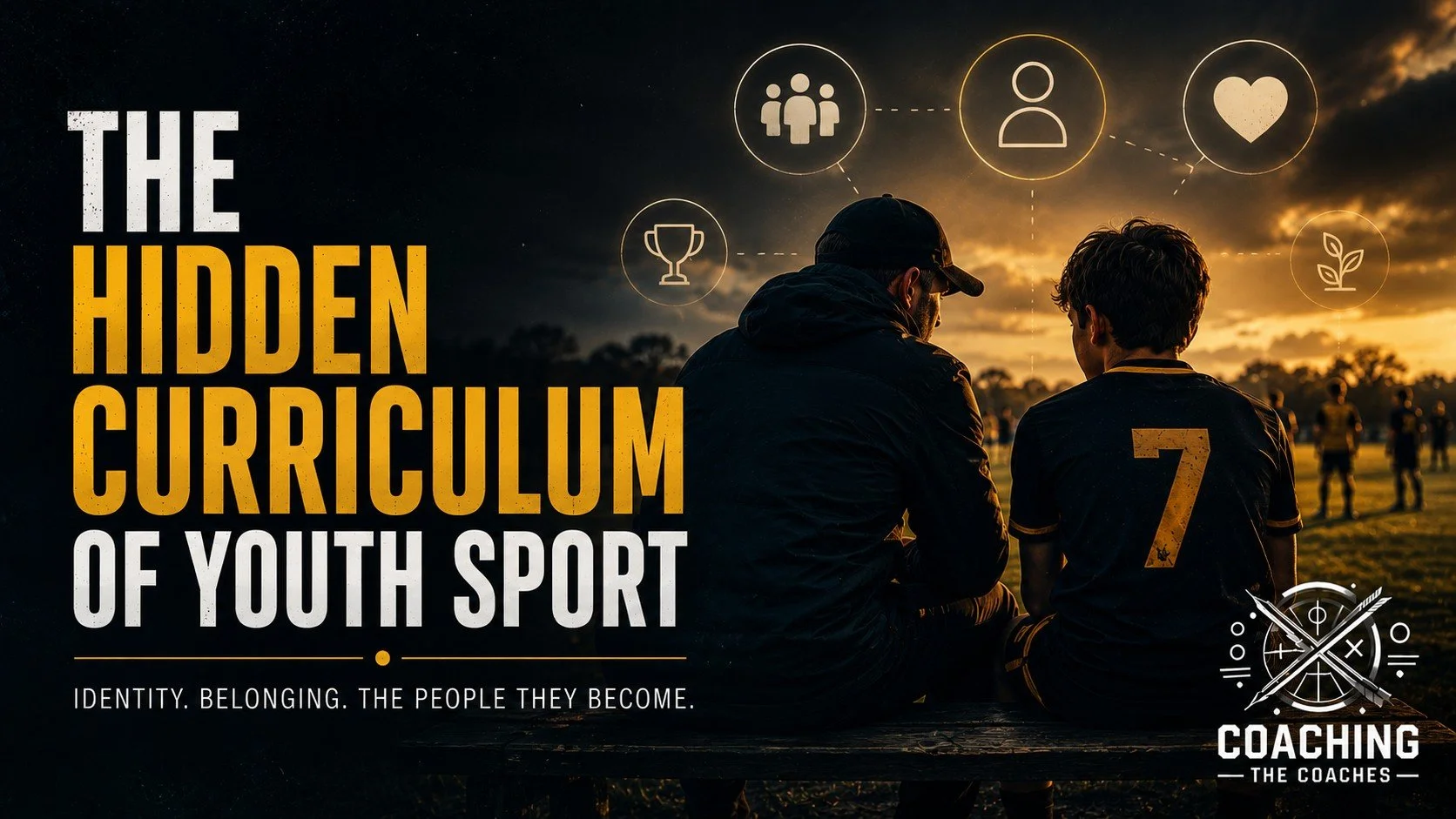
The Hidden Curriculum of Youth Sport: Identity, Belonging and the People Young Athletes Become

The Hidden Curriculum of Youth Sport: Identity, Belonging and the People Young Athletes Become

When we think about youth sport, we often focus on what is visible: the scoreboard, the ladder, the selection decisions, the trophies, and the results. Yet some of the most important lessons young athletes learn are never formally taught. Through every training session, coach interaction, team culture, and parent conversation, young people are learning what success means, where they belong, how mistakes are treated, and ultimately who they are becoming. Educational sociologists call this the hidden curriculum—the lessons learned without being written into the lesson plan. Sport has one too. The question is not whether young athletes are learning from it. The question is what they are learning. Because long after the final whistle, most athletes will not remember every result. They will remember the coaches who believed in them, the teammates who accepted them, the moments they felt valued, and the lessons they carried into the rest of their lives. Perhaps the most important outcome of youth sport is not the athlete it produces, but the person it helps create.

Read More

What Are We Really Building? A Reflection on Youth Sport, Identity, and the Systems We Sustain

What Are We Really Building? A Reflection on Youth Sport, Identity, and the Systems We Sustain

We spend so much time asking how to develop better athletes — but rarely stop to ask what kind of people our systems are actually producing. Youth sport isn’t neutral; it shapes identity, belonging, and motivation long after performance fades. If the system is working exactly as designed, the real question becomes: is it building what we truly value?

Read More

Who Holds the System Together? Care, Character, and the Moral Load of Junior Sport

Who Holds the System Together? Care, Character, and the Moral Load of Junior Sport

Junior sport often presents itself as a system of rules, pathways, and policies....but in practice, it is held together by people quietly doing moral work. Volunteer coaches, parents, administrators, and mentors absorb emotional labour, manage conflict, protect values, and buffer young athletes from the sharp edges of performance culture. This care work is rarely recognised, yet it shapes how safe, meaningful, and human sport feels for those growing up inside it.

This long-form piece explores junior sport as a moral ecosystem, asking who carries the burden of care when systems prioritise outcomes over relationships. Drawing on sport sociology, moral psychology, and youth development research, it examines how character is shaped not by slogans or codes of conduct, but through everyday decisions about attention, fairness, belonging, and restraint....and what happens when that moral load becomes unsustainable.

Read More